
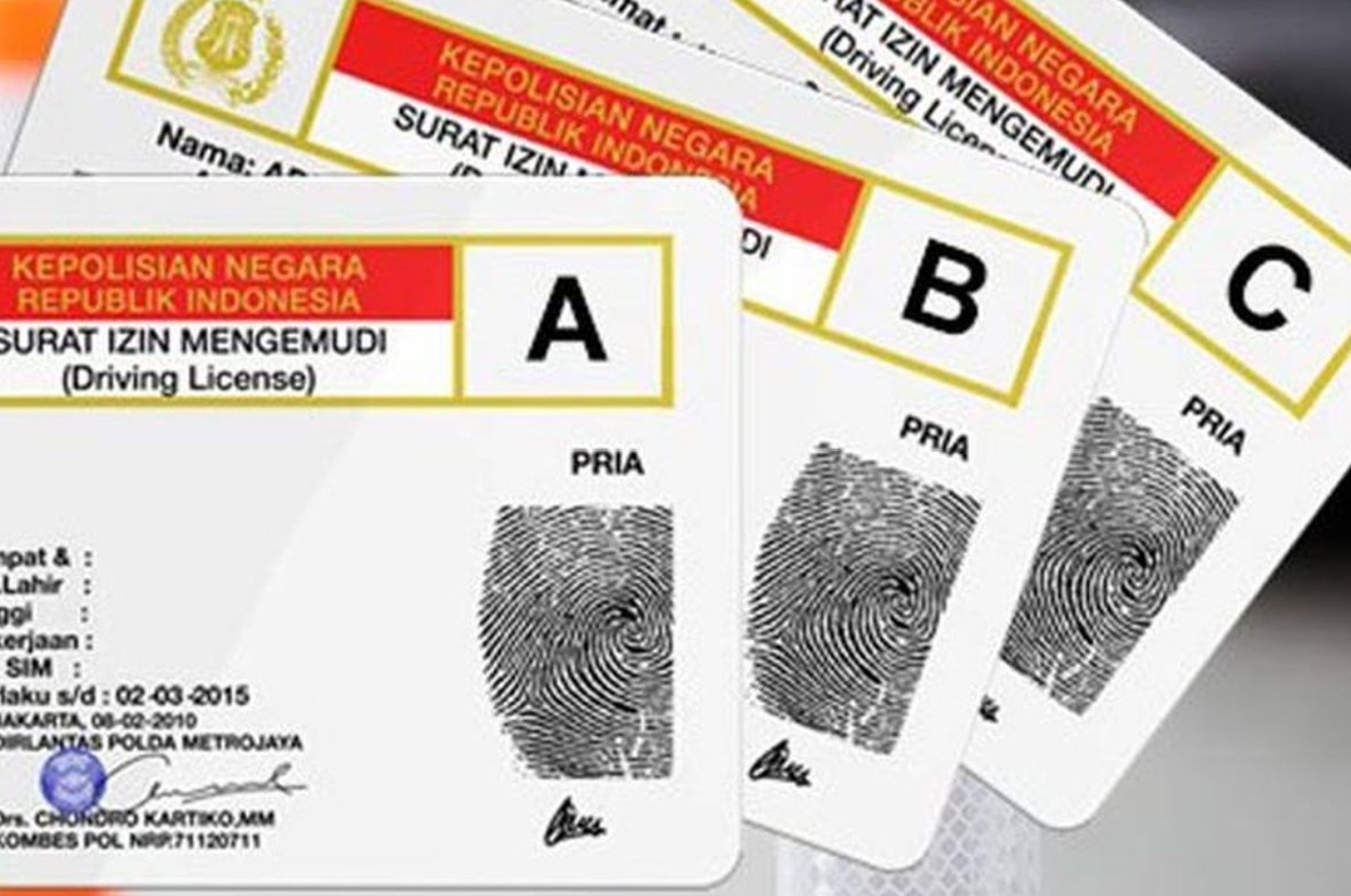
JAKARTA — The Traffic Corps of the Indonesian National Police (Korlantas Polri) has firmly refuted circulating social media claims regarding the implementation of lifetime Driver’s Licenses (SIM) in Indonesia. Police authorities confirmed that the viral posts are false, emphasizing that driver’s licenses remain valid for five years from the date of issuance.
Beyond debunking the misinformation, Korlantas highlighted a far more serious threat: fraudulent registration links piggybacking on the lifetime license rumor are actively being used for digital scams and personal data theft.
Recurring False Narratives and Official Clarification
Rumors of a lifetime driver’s license are nothing new. The narrative repeatedly surfaces on social media, fades away, and resurfaces under different packaging. Its distribution pattern remains consistent—typically appearing as short-form videos or forwarded chain messages accompanied by promises of free license services and convincing-looking registration links.
Korlantas Polri addressed the resurfaced rumor in early November 2026. Head of Korlantas Polri, Police Brigadier General Aries Syahbudin, stressed that no lifetime license policy exists and that the police continue to enforce prevailing regulations.
“The regulation is not in effect yet—no, it does not exist. So we are still applying the current rules,” Brig. Gen. Aries told reporters in Jakarta on Tuesday (10/11/2026).
Legal Basis for the Five-Year Validity Period
Director of Registration and Identification (Dirregident) at Korlantas Polri, Police Brigadier General I Made Agus Prasatya, explained that the five-year validity rule is governed by Article 85 paragraph (2) of Law No. 22 of 2009 on Road Traffic and Transportation, which stipulates that a driver’s license is valid for five years and may be extended.
Brig. Gen. Made Agus further emphasized that a driver’s license is not merely an administrative document or a simple proof of eligibility.
“A driver’s license serves as proof of competence as well as physical and psychological fitness to drive. Therefore, periodic re-evaluation and testing every five years are necessary to ensure drivers continue to meet road safety requirements,” Made Agus stated in a written release on Sunday (8/11).
Under this framework, license renewal acts as a critical checkpoint to assess a driver’s ongoing capability and health condition, rather than a routine card replacement.
Fake Links as a Gateway for Data Theft
Korlantas Polri urged the public to stay vigilant against digital fraud exploiting the lifetime license rumor. Unofficial registration links and offers for free driver’s license services have been circulating across TikTok, WhatsApp, and Instagram.
According to Korlantas, these links serve as phishing traps designed to harvest sensitive personal information. Users who submit forms on unofficial websites risk handing over their identities to malicious actors.
Police advise citizens not to easily trust unverified claims, avoid clicking suspicious links or submitting personal data on unofficial portals, and always cross-check public service information through official Polri channels.
This recurring cycle demonstrates that public service hoaxes rarely disappear completely; the same narrative simply waits for a new moment to return with more enticing promises. Checking official sources remains the most vital—yet most frequently overlooked—first line of defense against digital fraud.