
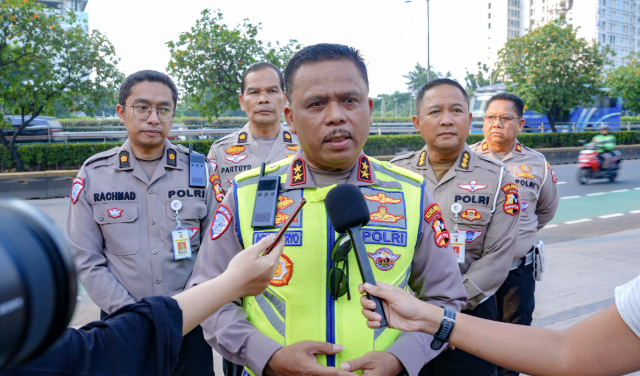
JAKARTA — The Traffic Corps of the Indonesian National Police (Korlantas Polri) has officially decided to postpone the execution of its major national agenda, Operation Patuh 2026. This centralized police operation was previously scheduled to run simultaneously across the archipelago from June 8 to June 21, 2026.
Head of Korlantas Polri, Irjen Pol. Drs. Agus Suryonugroho, S.H., M.Hum., explained that this tactical postponement was executed to ensure optimal efficiency in the field. The rollout of Operation Patuh needs to be carefully realigned with the broader framework of the police force’s annual traffic operations calendar.
The core focus of this adjustment is directed toward establishing a mature public order operation blueprint (operasi cipta kondisi) ahead of the upcoming Christmas and New Year (Nataru) holiday season. Korlantas Polri notes that there are at least five major traffic operations that run progressively and sequentially throughout a single annual working period.
“We have indeed socialized Operation Patuh beforehand. There are five major operational agendas within the police force, particularly here at Korlantas. The first is Operation Keselamatan, which directly precedes Operation Ketupat,” Irjen Agus explained, mapping out his agency’s institutional workflow.
Synchronizing the Timeframe Prior to Year-End Security Deployments
Furthermore, the two-star general deeply outlined the operational transition sequence. Following the completion of the Eid-focused Operation Ketupat, the next relay is filled by its operational counterparts, namely Operation Patuh and Operation Zebra.
Both operations essentially serve as the fundamental stepping stones for public order enforcement before entering the peak security phase of Operation Lilin during the Christmas and New Year celebrations. Given that the timeline leading up to the year-end holiday season is still considerably far off, Korlantas Polri has chosen to hit the brakes and delay the immediate rollout.
The traffic police will utilize this operational window to conduct a profound, data-driven analysis and a comprehensive evaluation. This analytical step is deemed critical before finalizing the most ideal timeline for executing Operation Patuh.
Kakorlantas added that his team will soon request further strategic directives and guidance from the National Police high command regarding the specific execution dates for Operation Patuh. The operation could potentially be deployed following the Bhayangkara Day celebrations, or a month thereafter.
Traffic Safety Education Must Never Fade Away
Even though large-scale enforcement movements like Operation Patuh are officially pushed back, Korlantas Polri firmly stresses that the institutional commitment to inspiring a disciplined driving culture will never fade. Postponing an operational calendar milestone by no means implies that road safety education will grind to a halt or loosen up.
On the contrary, this enforcement pause is intentionally capitalized on as a golden momentum to strengthen independent, organic safety awareness within public conscience. Citizens are strongly encouraged to maintain constant discipline on public roads without requiring the psychological pressure of a dedicated police crackdown.
Irjen Agus reiterated firmly that traffic safety margins should ideally flourish from collective public awareness, rather than a mere fear of receiving a citation from field officers. Motorists are urged to consistently respect traffic signals, maintain discipline in utilizing safety gear such as SNI-certified helmets and seatbelts, and value the equal rights of fellow road users.
Korlantas Polri maintains that a genuine culture of order can never be constructed if the state relies solely on punitive law enforcement tools or continuous crackdowns. Humanistic educational channels, open dialogic communication, and active public participation remain the most vital pillars in establishing sustainable road safety, security, order, and smoothness (kamseltibcarlantas).
Through this wise decision, Korlantas Polri aims to ensure that the law enforcement process in Indonesia advances in perfect harmony with public awareness growth. While routine traffic operations remain important as a behavioral stimulus, ultimate safety on public roads is unconditionally determined by the daily behavior and character of the community itself.
Source: Korlantas Polri