


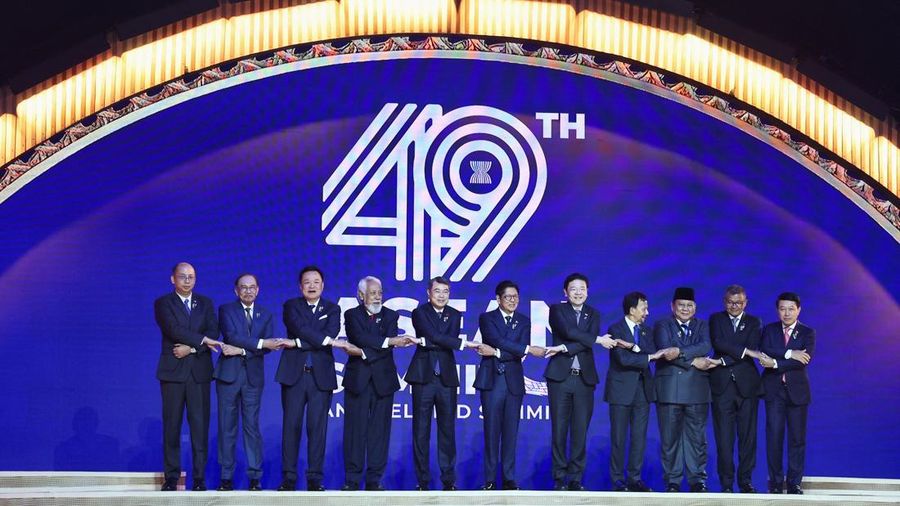
JAKARTA — The Government of Indonesia has reaffirmed its full commitment to finalizing the signing of the Enhanced Memorandum of Understanding (MoU) on the ASEAN Power Grid (APG) during the 49th ASEAN Summit in Manila, the Philippines, held from November 15 to 17, 2026.
This strategic commitment is being spearheaded by the Coordinating Minister for Downstreaming and Energy and Minister of Energy and Mineral Resources (ESDM), Bahlil Lahadalia, while accompanying Indonesian President Prabowo Subianto at the high-level regional forum.
Bahlil emphasized that Indonesia’s participation goes far beyond merely connecting cross-border power cables with neighboring countries; rather, the nation is entering the partnership with well-structured regulations and concrete economic benefits guaranteed for its citizens.
“Indonesia fully supports the realization of the ASEAN Power Grid. Regional electricity interconnection will strengthen energy security and open up new economic opportunities. However, this cooperation must stand on the principle of mutual benefit while continuing to respect the regulations and national interests of each country,” Bahlil stated in an official release on Monday (11/16/2026).
Domestic Regulatory Readiness and APGCC Action Plans
The ASEAN Power Grid serves as a flagship energy cooperation program under the ASEAN Plan of Action for Energy Cooperation (APAEC) 2026–2030 framework. The network is designed to interconnect electrical power systems across ASEAN member states to establish a more reliable, efficient, and sustainable regional electricity supply.
Previously, Indonesia conveyed its commitment to completing the MoU prior to the summit during the 44th ASEAN Ministers on Energy Meeting (AMEM) in Manila in October 2026. Since that milestone, the government has moved swiftly to finalize domestic regulatory frameworks to ensure seamless implementation of the regional cooperation.
“We want Indonesia to join in a state of complete readiness. Therefore, we arranged our domestic regulations first, so that once the interconnection operates, its benefits are directly felt by the Indonesian people and neighboring countries,” Bahlil affirmed.
Once the MoU enters into force, the technical execution of the APG cooperation will be carried out through several task forces operating under the coordination of the ASEAN Power Grid Consultative Committee (APGCC). The work plans for each task force have been formulated and brought to the 49th ASEAN Summit alongside other key energy sector cooperation documents.
The signing of this agreement is viewed as a pivotal step toward building an integrated electricity network across Southeast Asia, reinforcing regional energy resilience while positioning Indonesia as an active and equal partner.