


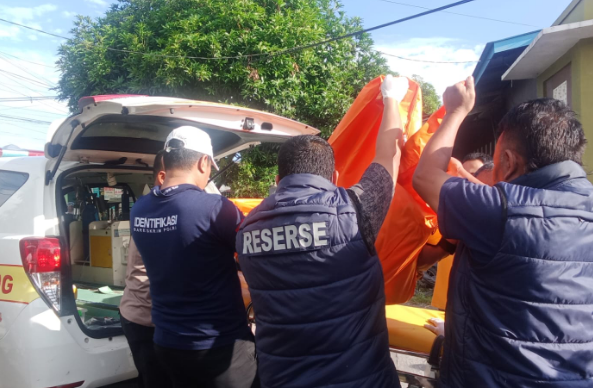
ACEH – A 32-year-old man identified by the initial K was found dead at his home in Perapat Sepakat Village, Babussalam District, Southeast Aceh Regency, on Thursday morning (24/9/2026). The Southeast Aceh Police Criminal Investigation Unit handled the incident by conducting a crime scene examination, identification, and medical examination. These procedures reflect a less visible side of #ReserseBekerja: ensuring that every conclusion is based on facts and evidence.
From a Public Report to Crime Scene Examination
The victim’s mother found K at around 5:00 a.m. and then sought help from nearby residents. The village head subsequently reported the incident to Babussalam Police. Officers immediately secured the location and coordinated with the Identification Unit of the Southeast Aceh Police Criminal Investigation Unit.
The Identification Unit then conducted a crime scene examination and identified the victim. The body was subsequently taken to H. Sahudin Regional General Hospital in Southeast Aceh for a medical examination. Head of the Southeast Aceh Police Criminal Investigation Unit, Iptu Zery Irfan, S.H., M.H., said that a prompt response at the crime scene helped preserve the condition of the location. According to Iptu Zery, the measure also supported accurate identification and fact-gathering.
Evidence, Not Assumptions
Doctors at H. Sahudin Regional General Hospital found no signs of violence on the victim’s body. The victim’s family subsequently declined an autopsy and formalized their decision in a written statement. The Southeast Aceh Police did not draw conclusions beyond the facts obtained through the crime scene examination and medical examination.
This approach is consistent with the direction of criminal procedure reform. During the Bareskrim Polri Forensic Laboratory Center’s Technical Working Meeting in June 2026, the Legal Division of the Indonesian National Police outlined a shift in investigations from confession-based approaches toward scientific evidence-based investigations. The presentation was delivered by Kombes Pol Dr. Beridiansyah, a senior officer from the Legal Division of the Indonesian National Police, representing the Head of the Legal Division.
The Bareskrim Polri Forensic Laboratory Center also emphasizes the importance of the initial stage of case handling.
During supervision at the Riau Regional Police Forensic Laboratory Unit, the forensic laboratory team recommended establishing a crime scene manager role to minimize potential procedural errors. Proper crime scene management provides an important foundation for subsequent stages of an investigation.
Maintaining and Developing Competence
The handling of the incident in Perapat Sepakat relied on the capabilities of officers working closest to the community. Babussalam Police personnel needed to understand how to secure the location before the Identification Unit arrived. The Identification Unit of the Aceh Regional Police Criminal Investigation Unit then had to examine the crime scene and accurately document its findings.
Such capabilities do not depend solely on available equipment. On September 10, 2026, Head of the Criminal Investigation Agency of the Indonesian National Police, Komjen Pol Syahardiantono, emphasized regular training, compliance with procedures, and public accountability as essential to maintaining investigators’ professionalism. The Head of Criminal Investigation Agency also required investigators to fully and consistently understand the implications of the new Criminal Code and Criminal Procedure Code.
These requirements also apply to regional police units such as the Southeast Aceh Police. The coordination between the local police station, the Identification Unit, and the hospital in handling this case demonstrates that procedures can work effectively when every element understands its respective responsibilities.
The incident in Perapat Sepakat did not end with a dramatic revelation. Instead, it illustrates the essence of #ReserseBekerja: securing the location, documenting facts, and not going beyond what the available evidence establishes. Investigators’ professionalism is an ongoing process maintained through learning, experience, evaluation, and adaptation to developments in the law.
Source: Metropolis.id, Liputanrakyat.com