


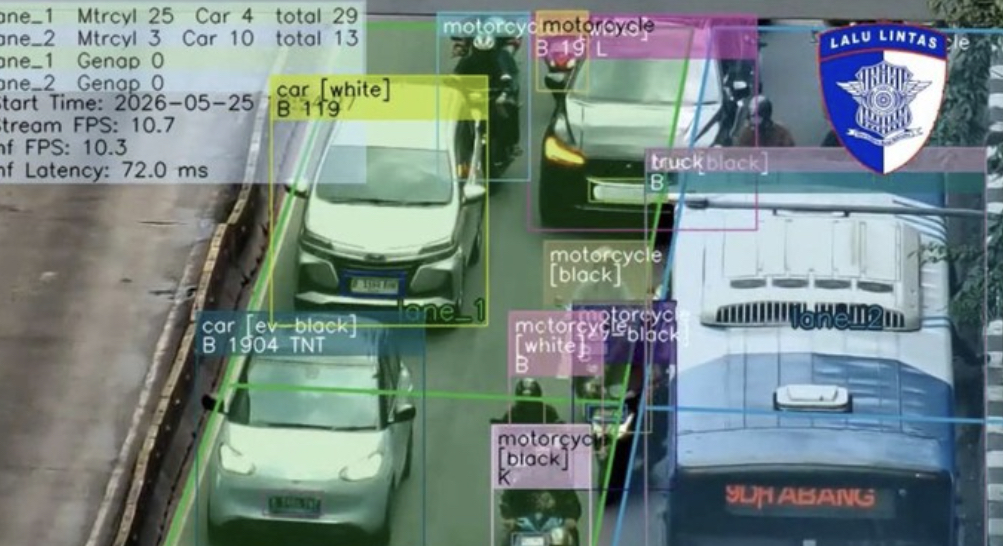
JAKARTA — The surveillance system tracking commercial freight vehicles violating Over Dimension Over Load (ODOL) regulations has officially entered a new era. While logistics vehicle checks previously relied heavily on manual roadside raids at weigh stations, digital transformation is introducing a highly objective, transparent, and measurable workflow.
The implementation of cutting-edge technology does more than just help officers detect violations instantly. This innovation ensures that the entire law enforcement process on public roads operates with greater fairness and equity for the transport industry.
Head of Korlantas Polri, Irjen Pol. Drs. Agus Suryonugroho, S.H., M.Hum., emphasized that digitalization is an essential component of Indonesia’s roadmap toward achieving a Zero ODOL nation by 2027.
According to his analysis, modernizing law enforcement in the digital era is not merely about changing equipment in the field. This major shift is about constructing a modern oversight system that earns deeper public trust.
“Technology helps ensure that surveillance is carried out fairly, transparently, and accurately,” stated Irjen Agus, outlining his agency’s policy direction.
Detecting Tonnage Violations Without Stopping Vehicles
Through the integration of ETLE cameras and Weight in Motion (WIM) technology, ODOL infractions can now be detected rapidly without relying entirely on manual inspections. The smart WIM system allows freight vehicles violating dimension or weight limits to be automatically flagged through digital data sensors.
With this tool in place, traffic oversight is no longer based on visual guesswork or subjective estimates by officers; it relies purely on verifiable, scientific data that stands up in a court of law. This technology creates a space for highly objective traffic enforcement.
Every freight fleet can be monitored and evaluated using identical measurement parameters—ranging from external dimensions and total axle load to other operational risk factors. This principle of equal treatment is essential so that all road users and logistics operators experience fair enforcement in the field.
In the context of handling ODOL cases, objectivity is crucial because the negative impacts of these violations are far-reaching. Overloaded vehicles accelerate roadway degradation, increase fatal accident risks, and disrupt the efficiency of the national logistics supply chain.
Consequently, technology-based surveillance has shifted from being an operational choice to an absolute necessity for the state.
Combining ETLE and WIM to Minimize Roadside Disputes
Technically, ETLE devices work optimally to document physical traffic violations digitally. Meanwhile, Weight in Motion technology possesses the remarkable capability to read a vehicle’s weight dynamically, without requiring the entire truck to pull over or halt.
The sophisticated combination of these two instruments creates a fast, effective, and efficient law enforcement framework. Traffic officers can now operate with verified data rather than relying strictly on visual observations.
This digital surveillance model also minimizes prolonged disputes between enforcement officers and drivers on the road. When violation data is automatically recorded and certified via a computerized system, enforcement becomes clear and indisputable, leaving no room for debate.
The general public can see transparently that the law operates through clean, objective mechanisms. Digitalization directly elevates the professionalism of law enforcement within traffic and road transport management.
Traffic officers are transitioning from roadside inspectors into skilled managers of transportation safety data. This shift aligns perfectly with the blueprint of Precision Policing (Polantas Presisi) in the modern era.
However, Kakorlantas reminded that advanced technology must move hand in hand with massive educational campaigns. Business owners, fleet operators, and truck drivers must understand that digital monitoring does not aim to complicate logistics operations.
The system is deployed purely to safeguard human lives on public roads. Achieving a Zero ODOL Indonesia can only be realized when technology, public awareness, and legal compliance align in a single direction.
Ultimately, digitalizing ODOL surveillance is an essential effort toward building a safer and more equitable national transportation network. Technology enables the state to monitor accurately, but the ultimate goal remains unchanged: protecting human lives, preserving infrastructure, and establishing orderly roads.
News Sources: Dialeksis.com, Peraturan BPK UU Nomor 22 Tahun 2009, Dishub Kota Malang UU Nomor 22 Tahun 2009, Kompas Otomotif