


JAKARTA — The bold policy regarding the freeze or moratorium on the use of rotator lights, sirens, and vehicle escorts—often dubbed the “tot tot wuk wuk” sound by the public—continues to gather massive support from various elements of society.
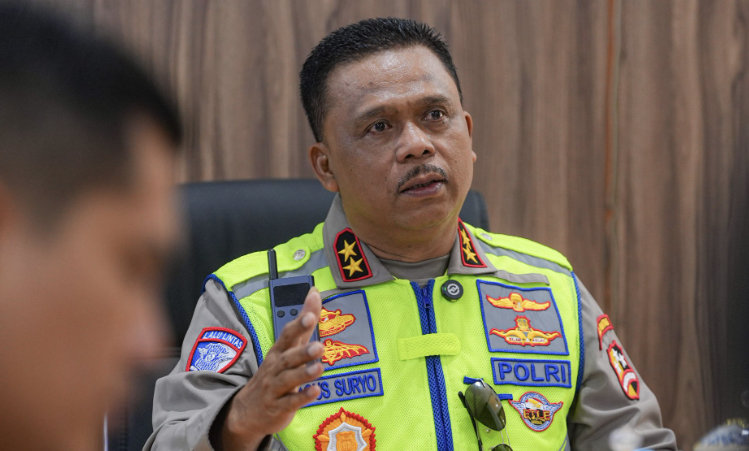
Head of Korlantas Polri, Irjen Pol. Drs. Agus Suryonugroho, S.H., M.Hum., emphasized that this moratorium policy remains strictly in force. This decisive measure serves as a direct follow-up to critical public input regarding the rampant misuse of sirens and strobe lights, which has long triggered discomfort on public roads.
Public policy and socio-political analyst, Nasky Putra Tandjung, highly praised this tactical decision by the Kakorlantas Polri, describing it as deeply humanistic and responsive. He stated that this concrete action demonstrates Korlantas Polri’s genuine courage and commitment to listening to the grievances of civil society.
“As part of civil society, we have actively monitored the ‘tot-tot’ siren sounds that have frequently disrupted public comfort. Up until today, those sirens and strobe lights are no longer heard on public roads,” Nasky stated in a written release in Jakarta, Tuesday (June 9, 2026).
Commitment to Cultivating a Fair and Humanistic Road Culture
In Nasky’s view, the enforcement of this policy serves as valid proof of Kakorlantas Polri’s seriousness in fostering a traffic culture that is far more orderly, fair, and humanistic. He assessed that Irjen Pol. Agus Suryonugroho did not merely execute formal, written rules on paper, but successfully addressed social anxieties with a wise leadership approach.
The freezing of siren and strobe light usage also showcases that the Traffic Police are becoming increasingly open to constructive criticism and suggestions from the wider public. This transparent communication is deemed crucial to restoring and strengthening the public trust index toward the institution.
The positive impacts of this policy are already being felt tangibly by daily commuters. The traffic atmosphere along major arterial routes is now noticeably calmer and more orderly, as non-emergency vehicle convoys can no longer sound sirens arbitrarily.
The general public now reclaims the true essence of roads as equal, shared public spaces, free from forced or artificial priority brackets. This new leadership within Korlantas is seen as bringing a fresh, positive dynamic to national traffic management.
Earning Acclaim from Civil Society to President Prabowo
“Under the leadership of Kakorlantas Polri Irjen Agus Suryonugroho, the Traffic Police have successfully brought about significant changes and continue to transform. Their performance has improved tremendously, earning widespread appreciation from various civil elements, the government, and even President Prabowo Subianto,” remarked Nasky, who is also the Founder of the Nasky Millennial Center.
Nasky added that these positive achievements are closely tied to the strategic directives and direct instructions from the Chief of the Indonesian National Police, Jenderal Polisi Listyo Sigit Prabowo. The Police Chief is seen as consistently pushing the entire corps to build public services that are adaptive, collaborative, and always aligned with the genuine interests of the citizens.
As the author of the book Polri Presisi, Nasky expressed his full support for Korlantas Polri to continue strengthening the role of the Traffic Police as the frontline guardians of traffic safety, security, order, and smoothness (kamseltibcarlantas). Modern traffic units hold a noble duty that transcends merely directing mechanical vehicle movements; they are guardians of human life.
To maintain the sustainability of this positive culture, Nasky invited all layers of society—including automotive communities, online motorcycle taxi (ojol) drivers, and public transport operators—to actively support and safeguard this policy. An orderly culture can never be built single-handedly by the police; it demands collective awareness from every single road user.
“Once again, we deeply respect and positively welcome this step by Kakorlantas as a tangible form of service transformation toward a more humanistic and Precision-driven (Presisi) police force,” Nasky concluded firmly.
Through the consistent implementation of this moratorium policy, Korlantas Polri has successfully proven to the public that the core of traffic service is not always about punitive enforcement or issuing tickets. More than that, the Traffic Police are present to safeguard public comfort, nurture order, and preserve a sense of justice for all citizens on public pathways.